Home › Tuckpointing and Repointing
Superior Masonry Montgomery provides detailed tuckpointing and repointing services for aging brickwork throughout Montgomery, AL. We remove failing mortar and pack fresh joints that match your existing brick. Protect your home from water damage while improving curb appeal.
Superior Masonry Montgomery provides professional tuckpointing throughout Montgomery, AL, Alabama and the surrounding area. Our licensed, insured crew delivers safe, clean, on-time work with a free estimate before anything begins. Call (334) 781-4198 or request your free quote.
Tuckpointing & Repointing for Montgomery Brick Homes and Buildings
Cracks in your brick joints, loose mortar, or water stains around your walls usually mean the mortar is wearing out, not the brick itself. Tuckpointing and repointing focus on those joints, removing failing mortar and replacing it with new material that locks your masonry back together. Superior Masonry Montgomery provides this work specifically for the weather, soil, and building styles we see every day across Montgomery and the River Region.
In Montgomery, clay soil movement, summer heat, and sudden storms all work against your mortar joints. Hairline cracks can let water in, which then expands with temperature swings and slowly pushes the joints apart. Tuckpointing and repointing address that problem directly. We stabilize the joints so your brick siding, steps, chimney, or porch can keep doing their job without needing full replacement.
Every project starts with a close inspection, not just of the damage you see, but of the surrounding wall, foundation, and flashing. We often find early-stage issues, such as mortar that looks solid from the yard but crumbles when probed, or mismatched previous repairs that are harder than the original mortar and are causing the brick faces to spall. Catching those details is what lets us build a repair plan that actually lasts in Montgomery’s climate.
How Tuckpointing and Repointing Are Actually Done
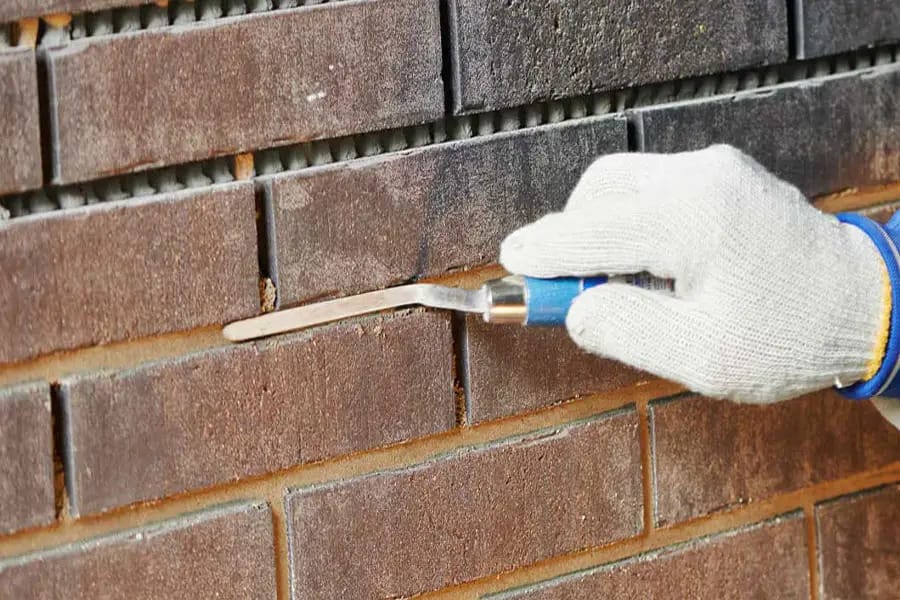
Good tuckpointing and repointing are detailed, hands-on work. The first step is cutting or grinding out the deteriorated mortar joints to the proper depth. At Superior Masonry Montgomery, we typically remove at least 2 to 2.5 times the width of the joint, or until we hit sound, stable mortar. We use small angle grinders with dust control and specialized hand tools around brick corners, windows, and softer historic brick where power tools would cause damage.
Once the loose mortar is out, we brush and blow the joints clean, then sometimes rinse lightly to remove remaining dust. Clean joints are critical because new mortar needs direct contact with the brick sides to bond correctly. For older Montgomery homes in neighborhoods like Cloverdale or Capitol Heights, we often find fragile brick faces, so we test-clean a small area first to make sure our method will not chip the surface.
Next, we mix a compatible mortar. For many modern homes, this is a Type N or sometimes Type S mix, adjusted for color and workability. For older homes and historic buildings, we may use a softer lime-rich mortar instead of a hard Portland-heavy mix, so the brick is not damaged over time. We then pre-dampen the joints so the brick does not pull water out of the fresh mortar too quickly. Mortar is packed in firmly in one or two lifts, depending on depth, then tooled to match the original joint profile, whether that is concave, weathered, flush, or a more decorative beaded style.
For true tuckpointing, especially on visible front elevations and chimneys, we may use two mortar colors. One color matches the brick, laid first to visually narrow the joints, then a contrasting fine line is added down the center of the joint. This gives the appearance of very tight, crisp joints. Once the mortar sets, we clean the wall by hand, avoiding aggressive acid washes that can damage softer brick or change the mortar color.
What Affects Tuckpointing Cost in Montgomery
Homeowners often ask why prices for tuckpointing and repointing can vary so much from one job to another. Several practical factors drive the cost. Accessibility is a major one. A ground-level garden wall or porch can usually be done from the ground using basic ladders. A two or three story chimney in East Montgomery or a gable wall near the roofline often requires staging, roof brackets, or small scaffolding to work safely. The more complex the access, the more labor and equipment time are involved.
The condition of the existing mortar also matters. If only the outer 1/2 inch of mortar is weak, removal is faster. If joints are deeply eroded, cracked behind the face, or have been patched with an incompatible material like hard concrete or caulk, we have to remove more material with more care. That adds time but makes a big difference in how long the repair will last.
Matching mortar color and joint style is another factor. Standard gray mortar in less visible areas is quicker to prepare. On prominent front facades where color match is important, we may run several small test batches and sample panels to dial in color, texture, and sand grading so the repair blends with your existing brickwork when it cures.
Finally, total area plays a role. A small localized repair on one corner of a chimney has a higher cost per square foot because setup, protection, and cleanup are still required. Larger jobs, like repointing long foundation walls or several elevations of a home, benefit from efficiency once we are set up on site. During our estimate, Superior Masonry Montgomery explains which of these cost drivers apply to your project so you know what you are paying for and where we can help control costs.
Common Masonry Joint Problems We See in Montgomery
Because we work all over Montgomery and the surrounding communities, we see patterns in how and where mortar fails. One common issue is vertical cracking at corners or above window and door openings. This often comes from minor foundation settling in our local clay soils. Repointing in these cases involves more than just filling the crack. We remove failed mortar in a wider area, check for loose bricks, and sometimes install small helical pins or masonry screws hidden in the joints to tie cracked sections together before we repoint.
Another frequent problem is water intrusion at chimneys. We see deteriorated mortar joints combined with missing or cracked chimney crowns, damaged flashing, or porous brick. If we only repoint the joints, water can still get in from above. Superior Masonry Montgomery will often recommend repointing along with crown repair or replacement, new or reworked flashing, and in some cases a breathable masonry water repellent on the upper courses. Taken together, that stops the cycle of moisture damage, efflorescence, and interior staining.
We also see failed previous repairs. These include mortar that is too hard for the original brick, joints filled with silicone or latex caulk, and in some cases joints smeared over the face of the brick. These quick fixes can trap moisture or cause more damage in freeze-thaw cycles. Correcting them means carefully removing the incompatible material, sometimes in several passes, then repointing with a mortar and joint profile that match the original construction.
In older Montgomery neighborhoods with historic or early 20th century brick, we often deal with soft, hand-pressed brick and lime-based mortar. These walls can be very durable if repaired correctly, but they do not respond well to aggressive grinding or modern high-strength mortar. Our crews adjust techniques and materials to preserve the brick while strengthening the joints, which is especially important if you plan to keep the original character of your home or building.
Why Local Knowledge Matters for Tuckpointing in Montgomery
Working on masonry in Montgomery is different from working in areas with colder climates or different soil. Our heat, humidity, and sudden thunderstorms mean the timing of tuckpointing and repointing, as well as the materials used, must be chosen carefully. For example, during peak summer, fresh mortar can dry too quickly in direct sun, which weakens the bond. Superior Masonry Montgomery may schedule certain elevations earlier in the day, use light shading, or lightly mist cured work to control drying and curing.
Our clay soils can move with moisture changes, which shows up as small stair-step cracks in mortar joints. Instead of assuming every crack needs structural repair, we first assess whether the movement is ongoing or historical. If we see old, inactive cracks paired with stable foundations, repointing may be all that is required. If the cracks are active, we may suggest combining repointing with drainage improvements, gutter changes, or coordination with a foundation specialist so your new joints are not stressed again right away.
Montgomery also has a mix of brick styles and eras, from mid-century ranch homes to newer subdivisions and historic structures downtown. Each group has its own typical mortar strengths, colors, and joint profiles. Because we work here every week, we recognize these patterns and can usually predict which materials will be compatible before we even mix a test batch. That local familiarity helps us complete your project more efficiently and improves the chances that your repaired area will blend with the original work once it cures and weathers.
What to Expect When You Hire Superior Masonry Montgomery
When you contact Superior Masonry Montgomery about tuckpointing or repointing, we start with an on-site visit. We look at the entire structure, not just the spots you point out, and discuss your priorities. Maybe you are trying to stop a specific leak, restore curb appeal before a sale, or protect a historic facade. We take notes, measurements, and photos, then explain where mortar needs to be addressed and where it is still sound.
Your written proposal will outline the areas to be repointed, any related repairs we recommend, and how we will handle access, protection, and cleanup. We specify the general mortar type and the joint finish we plan to use, and if color matching or decorative tuckpointing lines are involved, we note that as well. Before work begins, we protect landscaping, patios, and nearby surfaces. On many jobs we set up dust collection when grinding and use hand tools in sensitive areas to reduce airborne dust.
During the work, our crew methodically removes old mortar, repacks joints, and tools them for a consistent appearance. We keep you updated on progress and point out any hidden conditions we uncover, such as loose bricks behind a deteriorated joint or gaps in flashing. At the end, we perform a detailed walkthrough with you, checking for uniform joints, proper clean up, and any touch-ups that might be needed.
When we finish, you can expect tighter, stronger mortar joints, improved resistance to water intrusion, and a cleaner, sharper appearance to your brickwork. We also provide guidance on basic maintenance, such as monitoring for new cracks, keeping gutters and downspouts working correctly, and when it might make sense to consider a breathable masonry sealer. Our goal is that you feel informed before, during, and after the project, and that your masonry is ready to handle Montgomery’s weather for years to come.